

How to Start an Online Radio Station: RadioCult Publishes 2026 Launch Guide

The RadioCult homepage, where broadcasters can start a 24/7 online radio station with scheduling, live and automated broadcasting, and unlimited concurrent listeners.
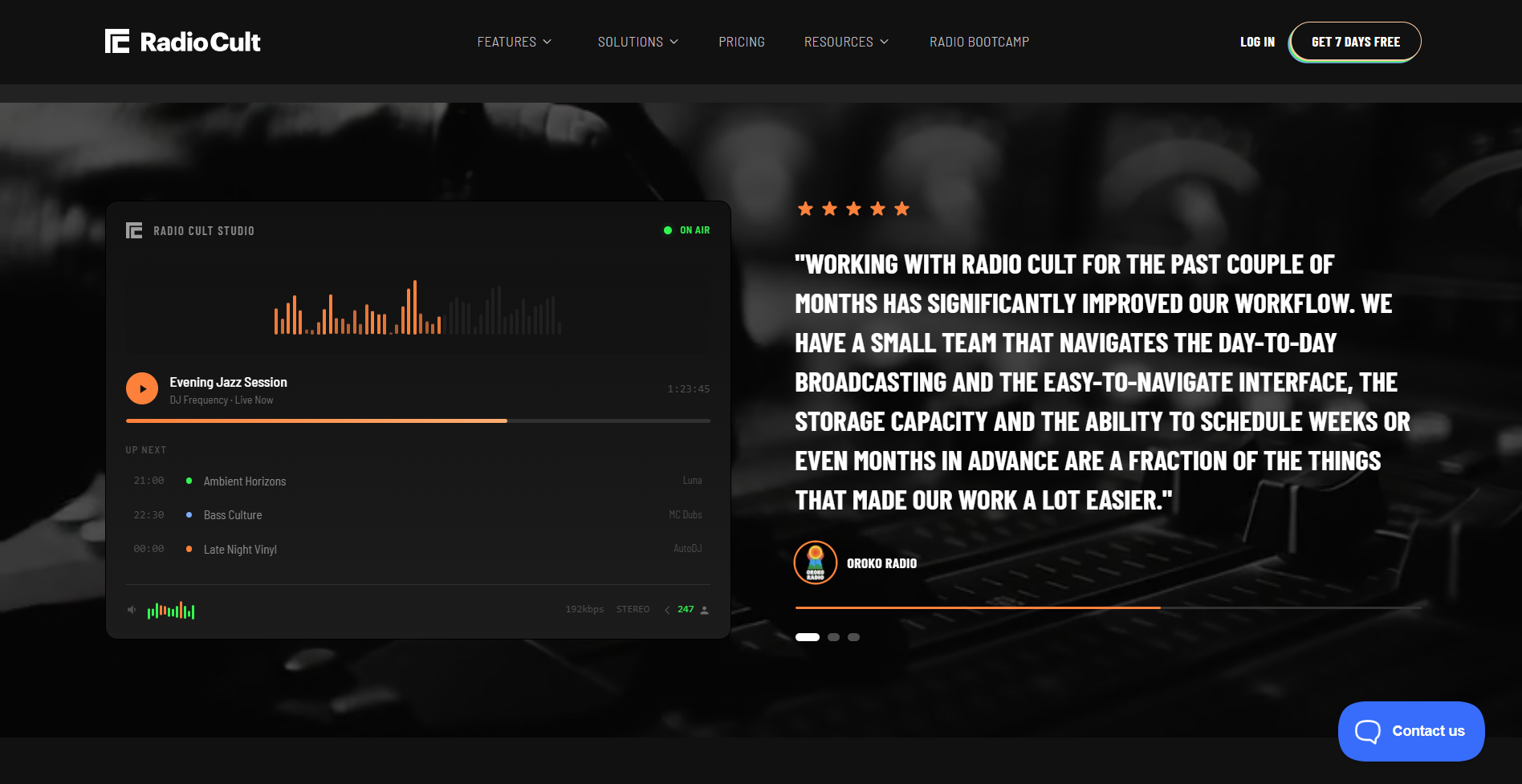
RadioCult's live player showing an on-air show, the upcoming schedule, and stream quality, alongside a five-star review from Oroko Radio.
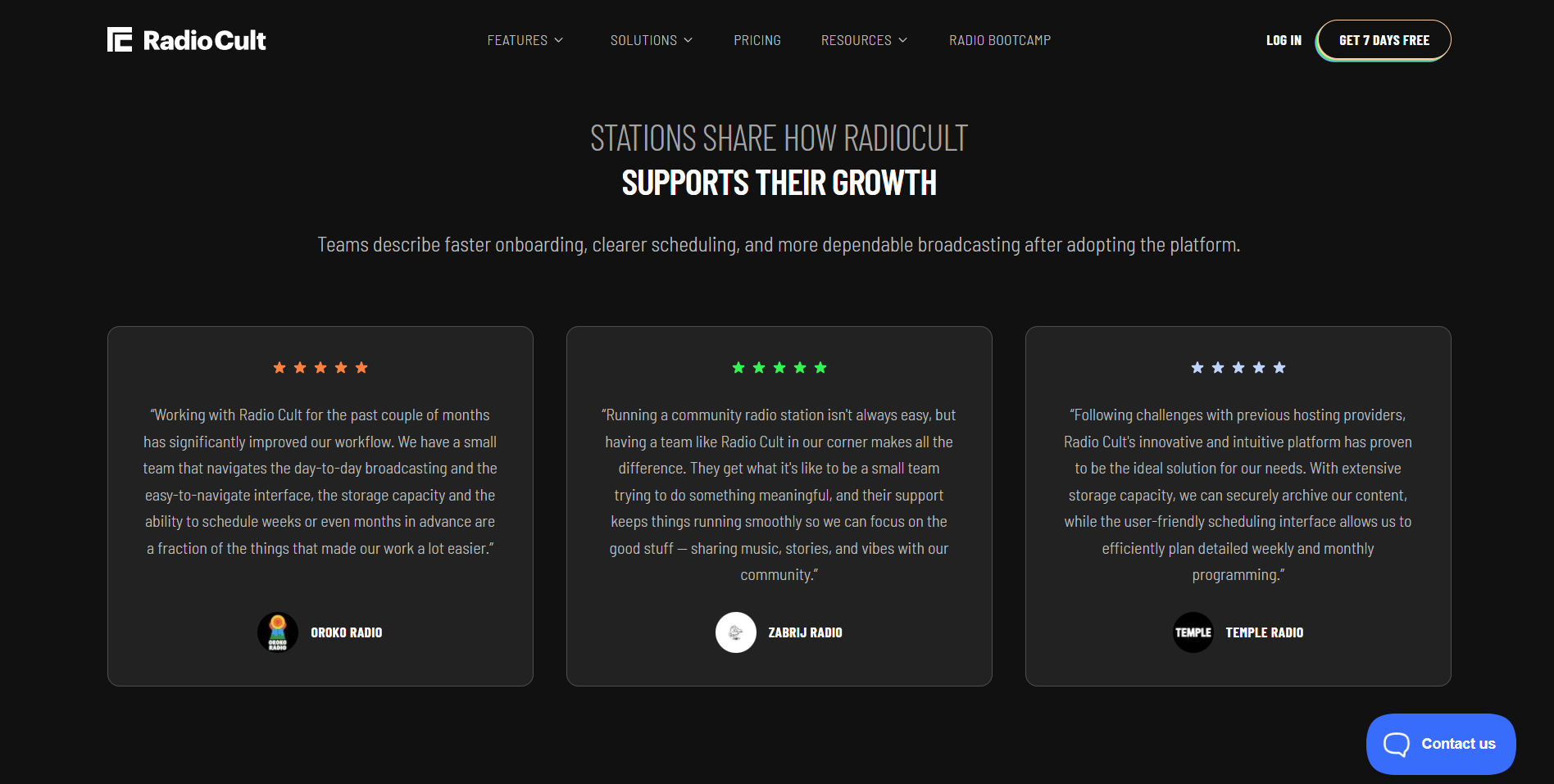
Independent and community stations, including Oroko Radio, Zabrij Radio, and Temple Radio, describe faster onboarding, clearer scheduling, and more dependable broadcasting with RadioCult.
A step-by-step guide to launching a 24/7 online radio station in 2026, from format and equipment to licensing, hosting, and reaching listeners.
The question new broadcasters ask most is simple: how to start an online radio station without getting lost in technical setup. RadioCult's guide answers it in six steps: choosing a format, selecting a hosting platform, securing music licensing, setting up a stream and schedule, adding a player or website, and launching with a plan to reach listeners.
The first decisions are creative. Stations choose a format and programming style, deciding between live shows, pre-recorded episodes, and automated playback for the hours no one is on air. From there, the guide walks through selecting a hosting platform that can handle continuous streaming, scheduling, player embeds, and analytics in one place, so a station is not stitching together separate tools.
Music licensing is the step most first-time broadcasters overlook. The guide is direct about it: stations playing copyrighted music need licenses from the relevant collecting societies, such as ASCAP, BMI, or SESAC in the United States, or PRS and PPL in the United Kingdom, before they go live. Getting this right early keeps a new station on the right side of the law as it grows.
With the legal groundwork in place, the guide covers the practical setup: configuring a stream and bitrate, building a calendar-based schedule with repeating shows, and testing audio quality before launch. It then shows how to give listeners somewhere to tune in, whether by embedding a player on an existing website or building a simple listen page with a schedule and contact details.
"Most people assume launching a station is a technical, expensive project," said a RadioCult spokesperson. "In reality, the biggest decisions are creative ones: your format, your schedule, and who you are speaking to. Once those are clear, the platform should handle the rest and stay out of your way."
That philosophy shapes RadioCult itself. The platform provides scheduling, media management, live and pre-recorded broadcasting, and AutoDJ, along with unlimited concurrent listeners on every plan, so stations can grow their audience without worrying about hitting a capacity ceiling. Plans start at $33 per month, and every plan includes a 7-day free trial.
The guide also looks beyond launch day, covering what an online radio station actually costs to run and how stations eventually earn revenue through advertising, sponsorships, listener memberships, and grants. The aim is to help new broadcasters plan for a station that can sustain itself, not just get on air once.
RadioCult is built for independent and community stations that work with multiple presenters or DJs, a group often underserved by tools designed for solo hobbyists. Whether someone is starting an online community radio station for a neighborhood, a campus, or a music scene, the steps are the same, and the guide is written to take them from planning to first broadcast.
RadioCult's Radio Bootcamp guide to starting an online radio station is available now on its website.
About RadioCult
RadioCult is an online radio hosting platform built for independent and community stations that broadcast 24/7 with multiple presenters. It combines live and automated broadcasting, radio-native scheduling, station and artist management, and unlimited concurrent listeners in one platform, with fast human support and pricing that starts at $33 per month. Learn more at https://www.radiocult.fm.
Corey Haines
Conversion Factory
email us here
Visit us on social media:
Instagram
Facebook
X
Legal Disclaimer:
EIN Presswire provides this news content "as is" without warranty of any kind. We do not accept any responsibility or liability for the accuracy, content, images, videos, licenses, completeness, legality, or reliability of the information contained in this article. If you have any complaints or copyright issues related to this article, kindly contact the author above.
